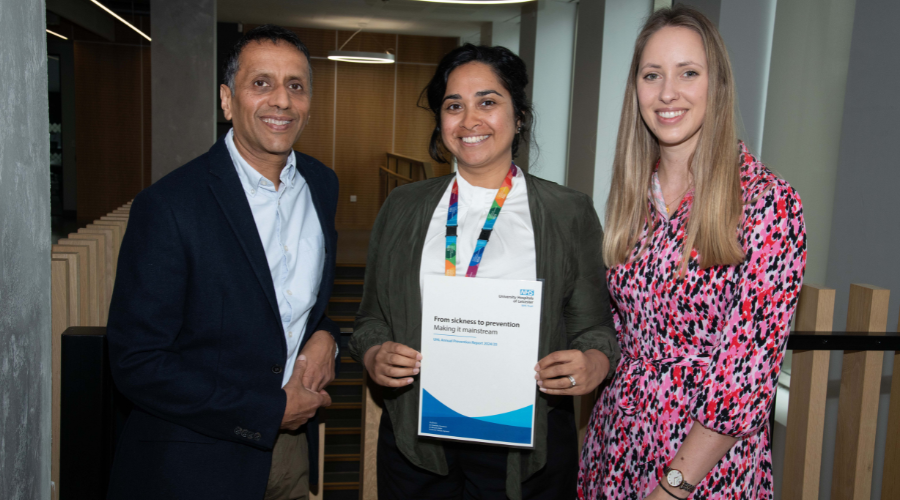
University Hospitals of Leicester NHS Trust (UHL) has published its third annual prevention report, which showcases work to save and improve lives, reduce hospital admissions and reduce health inequalities across Leicester, Leicestershire and Rutland (LLR) through proactive prevention.
The report highlights work which took place in 2024/25 – with partners including the LLR Integrated Care Board, primary care providers, local authorities and voluntary sector organisations – to tackle a range of preventable health problems through early interventions that provide patients with more efficient and equitable access to diagnosis, treatment and support.
The work presented in UHL’s prevention report ranges from helping patients to stop smoking tobacco or drinking alcohol, to diagnosing and treating blood-borne viruses (BBVs) and tuberculosis.
For the first time, the report contains a dedicated paediatric chapter, focused on work to tackle childhood obesity in LLR.
Highlights in the report include:
- UHL’s tobacco dependence treatment service, run in partnership with Leicester City Council, helped 1,848 patients to engage with an attempt to quit smoking from September 2024 to August 2025
- Opt-out BBV screening at the Leicester Royal Infirmary’s Emergency Department identified more than 100 new cases of HIV, hepatitis B and hepatitis C from November 2024 to October 2025
- A 30% reduction in emergency department visits for frequent attenders, following an intervention from UHL’s alcohol care team
- UHL’s complications of excess weight service supported more than 200 children and young people, with patients seeing clinically significant reductions in their BMI
A shift in focus from sickness to prevention is one of the three pillars of the NHS’ 10 Year Health Plan for England. UHL’s report emphasises the importance of encouraging greater uptake of preventive care, like screening, vaccination and chronic disease management – particularly in more deprived areas, where social factors such as housing, levels of income and education can have an impact on how residents experience healthcare.
UHL’s Director of Health Equality and Inclusion, Dr Ruw Abeyratne, said: “Working with our partners to embed prevention into as many interactions as possible – whether at admission, discharge or an outpatient appointment – is helping people to stay well for longer, reducing avoidable ill-health, and providing greater health equity across our region.
“The positive outcomes described in this report show our shared commitment to supporting a long-term shift from sickness to prevention. This year, we aim to consolidate and expand on the good work described in the report, so that more people than ever benefit from the power of prevention.”
Professor Nil Sanganee, Chief Medical Officer for the Leicester, Leicestershire and Rutland Integrated Care Board, said: “We have identified illness prevention as a strategic priority, and have drawn upon an extensive range of data to identify key areas for investment, in order to improve the health of local people. The UHL services detailed in this report demonstrate the impact of some of these investments, as well as identifying the next steps, so that more patients can achieve good health.
“Smoking, harmful levels of alcohol consumption and obesity are key modifiable risk factors for cancer, respiratory diseases and heart and kidney issues, which are the main causes of premature death in LLR. The progress made by UHL in providing services which support patients to address these risk factors is impressive and, as strategic commissioners, we will continue to work with UHL and other providers to improve our population’s health.”
Rob Howard, Director of Public Health at Leicester City Council, said: “We very much welcome UHL’s latest Prevention Report, which clearly shows the impact of making prevention part of routine care — whether helping nearly 1,900 patients to begin a quit attempt, or identifying substantial numbers of previously undiagnosed blood‑borne viruses.
“The report also underlines why it is vital that we continue to focus and allocate resources where they are most needed, particularly in our most deprived communities in the city, so that prevention becomes the norm for everyone and health inequalities are reduced across Leicester, Leicestershire and Rutland.”
Download the 2024-25 UHL Prevention Report at https://www.uhleicester.nhs.uk/publications/prevention-report-2024-25/