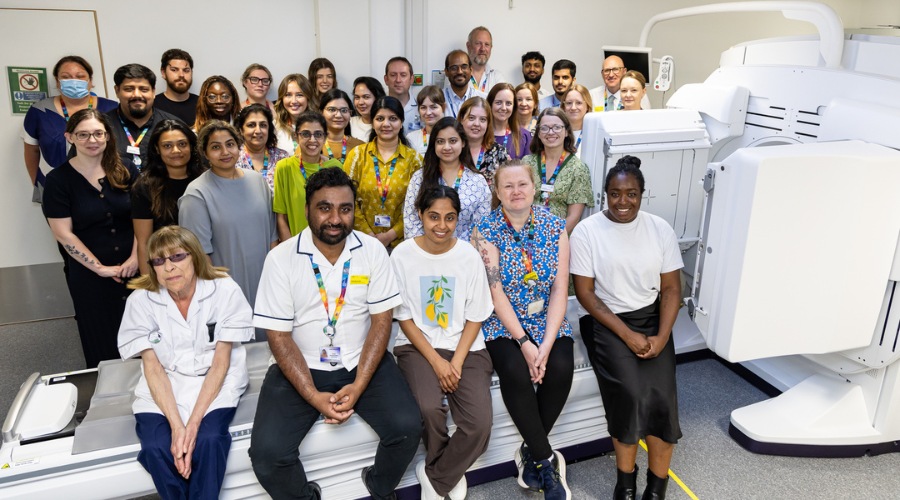
A new gamma camera has been installed at the Glenfield Hospital, as part of an ongoing project to improve nuclear medicine services at UHL.
The new GE HealthCare Aurora SPECT/CT camera will help doctors to assess the function of their patients’ organs, combining this with a structural scan. It will increase the capacity of UHL’s nuclear medicine service, which currently sees around 5,000 patients annually, adding up to 1,000 more appointments per year.
Nuclear medicine is one of the most highly regulated and technically specialised areas of hospital care. It involves using small, safe amounts of radiopharmaceuticals, together with advanced imaging technology, to diagnose, monitor and treat a range of conditions including cancer, heart disease, and some neurological disorders.
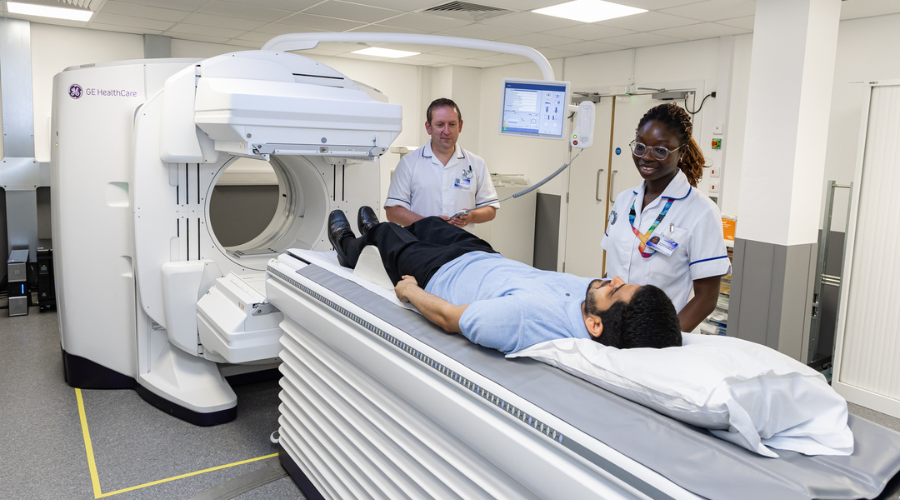
After a patient is administered with a small amount of a radiopharmaceutical, chosen to target the relevant part of the body, UHL’s gamma cameras – including the new Aurora model – show where the radiopharmaceutical has gone, creating a picture of the distribution of radiation in the body to help clinicians as they investigate how organs are functioning.
The GE Aurora can also perform a CT scan, giving an improvement in image quality, along with anatomical mapping to further aid diagnosis.
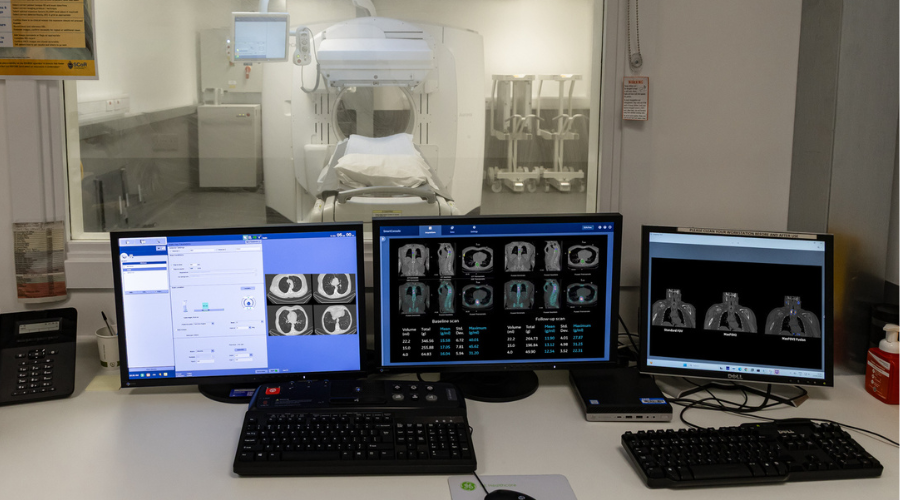
The installation of the new camera is part of a wider refurbishment of the nuclear medicine facility at the Glenfield Hospital, which now serves as the main base for UHL’s diagnostic nuclear medicine work. A hub for the growing field of molecular radiotherapy and ‘theranostics’ is also being developed at the Leicester Royal Infirmary.
Martyn Farmer, Interim Group Head of Nuclear Medicine at UHL and University Hospitals of Northamptonshire NHS Group, said: “Installing this new camera and the refurbishment of our base at the Glenfield Hospital are the next steps towards an exciting future for nuclear medicine at UHL.
“These developments will help our department and the services we offer to patients to go from strength to strength.”
The gamma camera installation was delivered through a managed equipment service, in strategic partnership with Ergéa UK.
John Muolo, Executive Vice President and Director of Strategic Relationships at Ergéa UK and Ireland said: “Enabling access to the latest healthcare technologies has always been a key focus of the UHL and Ergéa partnership. Through close collaboration and a shared commitment to innovation, our teams work together to advance patient care, improve service delivery, and support better outcomes for patients.”
As part of our Group Clinical Strategy work, colleagues across UHN and UHL have started working towards a shared group‑wide nuclear medicine model. The emerging model aims to introduce a single management structure, a shared governance system, increased digital integration, plus a unified booking process over the longer term. The aim is to benefit patients by providing a single, consistent pathway, with faster access to appointments through shared capacity.