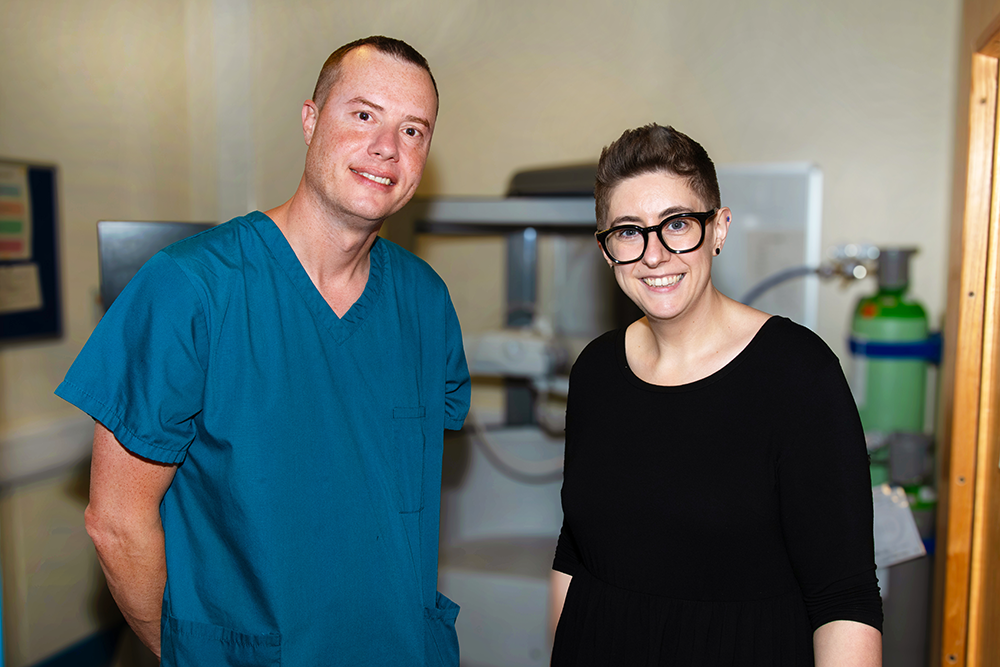
The respiratory physiology team has made big improvements to help patients with breathing difficulties, thanks to a recent project led by Kerrie and her team at the Glenfield Hospital.
In 2023, patients were waiting an average of 17 weeks for breathing tests, much longer than the six-week national target – with nearly 1,000 people on the waiting list. Currently, the waiting list is now approximately 600 patients waiting on average of 10 weeks.
Kerrie and her team analysed two years of data and identified opportunities to improve. They introduced text reminders for patients, which halved the number of missed appointments.
They reduced the amount of time needed to train staff and by creating a more focused and effective training package, which freed up staff time to see patients.
They reviewed the way every aspect of patient care was analysed – this is called clinical coding – to capture all treatments provided, which leads to better treatment decisions for patients as well as making sure the services are properly paid for the work they do.
These changes spurred the team to take control of other processes, identifying solutions to issues as they arise and finding ways to make services more efficient. From organising daily work, to improving care for patients who need sleep and ventilation support, the team is building a culture of improvement.
Admin Team Leader, Kerrie Parker, said: “Alongside reducing our waitlist and halving the number of patients who did not attend appointments, we have managed to refine staff training, improve communication with patients and boost staff morale.
“The project really helped to change the mindset of our entire department. The team have a different baseline of the expectations of how we work because we’ve been through this process.”
This project is part of myQI: your care – our campaign that shines a light on the everyday improvements our teams are making across UHL for the benefit of our patients.
The myQI campaign shares stories from our teams who have spotted opportunities to make things better and acted on them – bringing real benefits to patients, as well as the colleagues who care for them.