
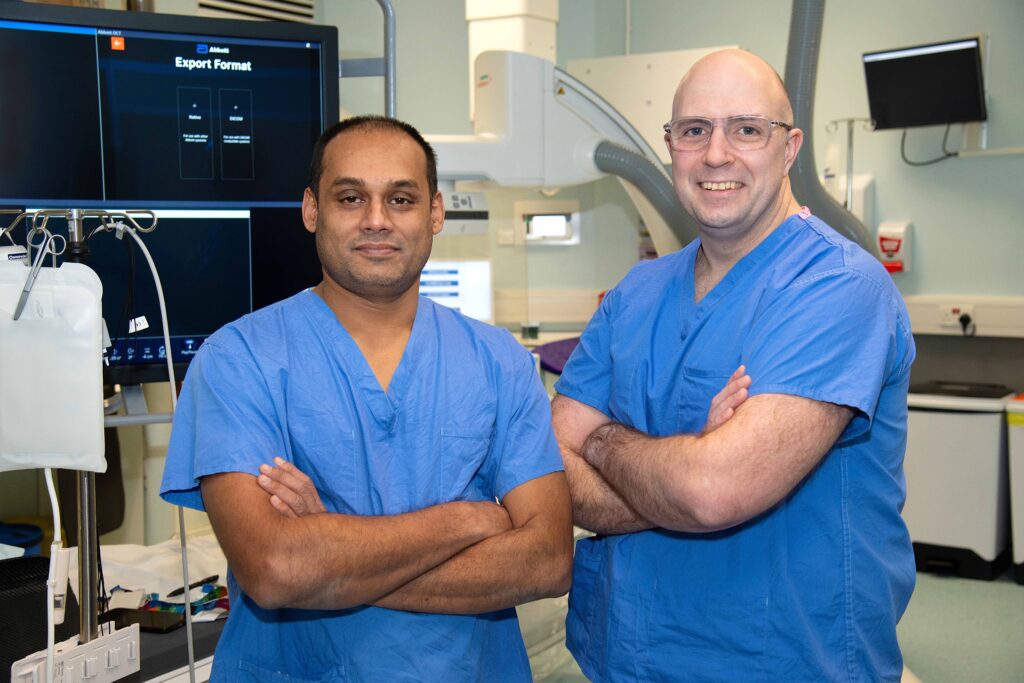
The cardiology team at the Glenfield Hospital has made significant improvements to care for patients needing a keyhole heart procedure called TAVI (Transcatheter Aortic Valve Implantation), as part of a wider Quality Improvement (QI) project.
Before the project, patients were waiting a long time for treatment. The team saw this as an opportunity to make the process quicker and easier for both patients and colleagues.
Working together, General Manager for Cardiology, Richard Lea, and his team carefully examined each step of the pathway and used clear data to find better ways of working. Changes were made at every stage so patients could be seen and treated sooner, while colleagues could work more efficiently and safely.
The results have been remarkable. The average number of procedures completed per week increased from 8.3 to 14.5 – a 74% improvement. The waiting list has fallen from 360 patients to just 11, and the overall wait time has reduced from 70.2 weeks to 26.8 weeks. The improvements have also boosted efficiency and finances, with an annual recurring revenue increase of £451,000, as well as savings of £211,255 from reduced patient length of stay.
These changes have not only improved patient care but also created a smoother, more rewarding experience for colleagues, who now benefit from a safer and more organised working environment.
Raj Rajendra said: “Using QI methodology, we were able to achieve a seamless transformation across the entire TAVI pathway.
“UHL now leads the referral to treatment time and other national metrics, which is an incredible achievement. It’s an absolute pleasure to work in a team where everyone goes above and beyond to deliver the best outcomes for our patients – true pride and joy!”
This project is part of myQI: your care – our campaign that shines a light on the everyday improvements our teams are making across UHL for the benefit of our patients.
The myQI campaign shares stories from our teams who have spotted opportunities to make things better and acted on them – bringing real benefits to patients, as well as the colleagues who care for them.