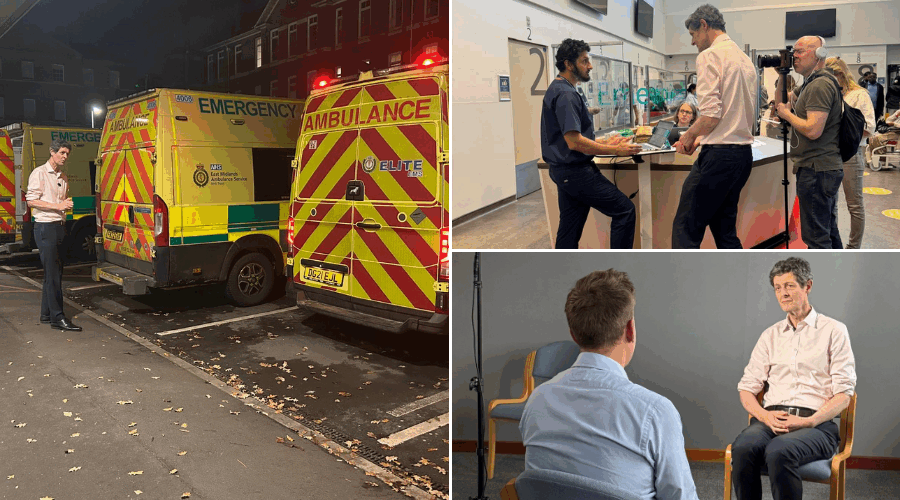
The BBC has gone behind the scenes at UHL’s emergency department (ED), to see first-hand how our teams are working to provide patients with compassionate care in the face of unprecedented pressures this winter.
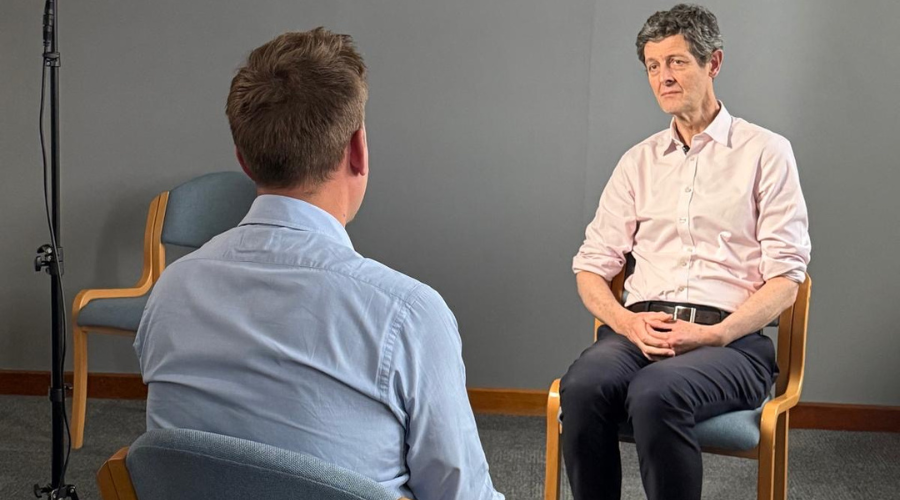
The news feature, presented by the BBC’s national health editor, Hugh Pym, highlights some of the initiatives which UHL have put in place to manage high levels of demand for care.
The report aired on the BBC’s national breakfast news programme on Thursday 11 December, with additional news bulletins to feature throughout the day. It can also be viewed on the BBC website.
UHL’s emergency department is the busiest single-site ED in England without a co-located urgent treatment centre. The Trust frequently cares for more than 900 patients every day—around 25,000 each month across adult and children’s departments. In October, attendances rose by 8% compared to the same month last year.

Hugh and his team spent a day in ED to understand how patients are assessed and prioritised, and in some cases, redirected for further assessment in a more appropriate healthcare setting, in accordance with their needs.
Deputy Head of Service for Adults’ ED, Saad Jawaid, spoke to BBC about the triage process, from a patient’s arrival at the front door through to receiving treatment.
He said: “As a senior colleague on the front desk, I can use my experience and knowledge to make prompt decisions about the best pathway for each patient. In some cases, patients need immediate emergency care, but, in others, we can reduce their waiting time in ED by redirecting them to the right place, whether that be their GP, another speciality within UHL for same day emergency care (SDEC), or an alternative facility in the community.”
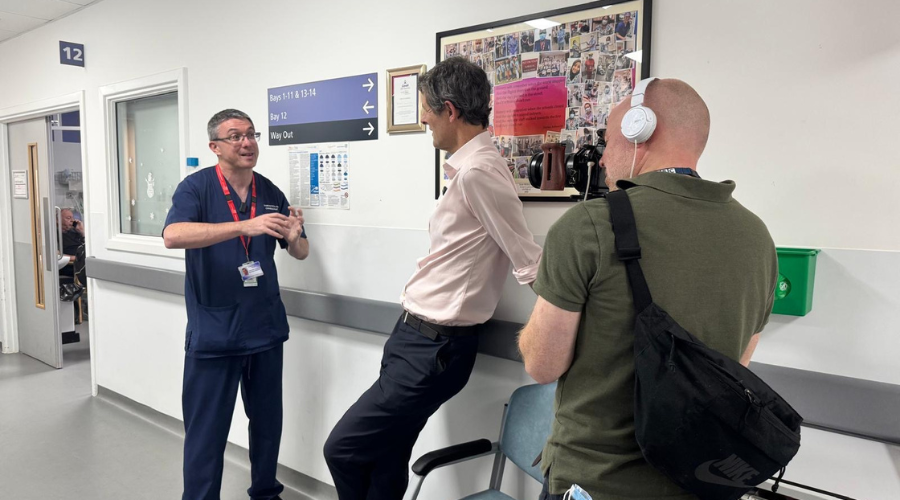
The BBC accompanied Lead Respiratory, Renal, Cardiology, Vascular and Thoracic Nurse, Clair Gibson on her morning triage round. Clair’s role is to assess, treat, and identify the most suitable pathway for the patient’s care, which helps to improve care and reduce waiting times.
Clair said: “During the winter months, we see increasing numbers of patients attending ED with respiratory and cardiology conditions requiring specialist care. As part of my assessment process, I review if any patient is suitable to receive specialist care from one of our outpatient services, virtual wards, or the SDEC Unit at the Glenfield Hospital. Where appropriate, these services enable us to discharge patients home on the same day.”
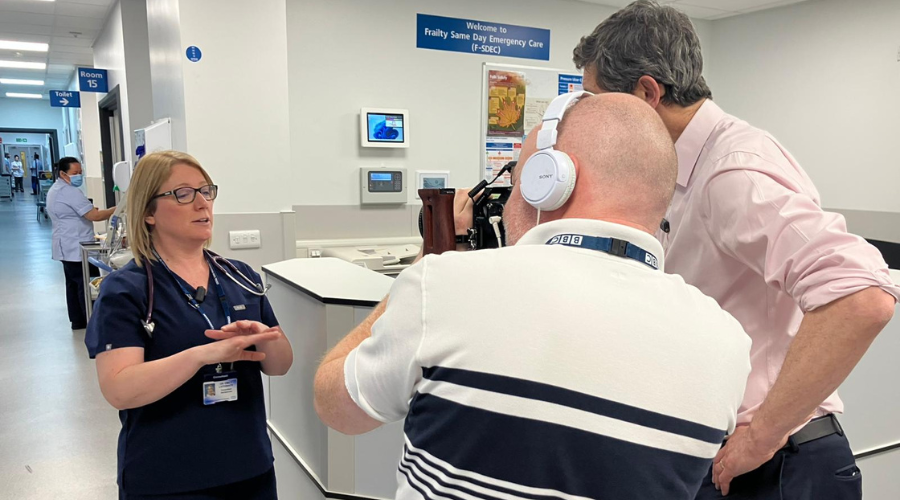
A second day of filming allowed UHL to showcase the innovation taking place to improve care and help patients get the right treatment in the right environment. The BBC was given an insight into UHL’s Frailty Same Day Emergency Care (F-SDEC) unit at the LRI, and Preston Lodge, a community rehabilitation unit based in North Evington.
At F-SDEC, Hugh spoke to Head of Service for Geriatric Medicine, Emily Laithwaite, about her team’s work to provide personalised care to frail patients aged 65 and over who come to ED. Since the unit opened, 71% of the patients referred to F-SDEC have been discharged within 24 hours, preventing unnecessary hospital admissions.
At Preston Lodge, the BBC saw how the first-of-its-kind facility supports the discharge of patients who no longer need care in an acute hospital setting, but still require specialist professionals, such as physiotherapists and occupational therapists, to support their rehabilitation. The unit demonstrates an investment in a long-term solution to support patient discharge across the Trust.
Paediatric Emergency Medicine Consultant, Professor Damian Roland, said: “I’m very proud of all the teams who took part in filming for their efforts on behalf of patients, with every individual playing a crucial role in providing the best possible care as soon as possible, and in the most suitable environment for their needs.”
UHL is here for patients throughout winter, and we urge anyone with health concerns to continue to come forward for care when they need it. Patients can help us by accessing the right services for their care – NHS 111 can help find the best place for their condition which could be a pharmacy, GP, urgent treatment centre, only using 999 and the Emergency Department for life and limb threatening situations
UHL-UHN Group Chief Executive, Richard Mitchell, said: “Working with the BBC has been a valuable opportunity to highlight the professionalism of our colleagues, who are providing the highest standards of care in challenging circumstances, as well as our commitment to innovation.
“By streamlining care pathways, investing in new facilities and raising awareness of how our communities can support us by choosing the right services for their care needs, we are taking action to ease pressure on our emergency department and reduce waiting times.
“We recognise there is more to do and remain open and honest about the challenges. At the same time, we have ambitious plans to continuously improve care, guided by our three priorities of transforming patient care, strengthening our culture, and delivering our financial plan.”
For more information about getting the right care in the right place, visit: https://www.uhleicester.nhs.uk/patients-visitors/emergency/