Parents of babies born at the University Hospitals of Leicester (UHL) are being offered testing for over 200 rare conditions.
The screening is part of a national research study seeking to identify treatable genetic conditions in newborn babies. These conditions may otherwise have gone undiagnosed. The screenings on offer could lead to earlier diagnosis and treatment.
UHL is now among 35 NHS Trusts across England recruiting to the Generation Study. The project is led by Genomics England in partnership with the NHS.
The study runs alongside the established heel-prick test for newborn babies. It provides a free, safe test to screen babies for over 200 rare conditions. These conditions usually appear in the first few years of life. If they are caught early, they can be improved and treated through the NHS in England.
Every year, several thousand children in the UK are affected by rare genetic diseases. Families often endure years of tests and uncertainty before they receive a diagnosis. For many families, delays in getting a diagnosis can mean treatment options are limited or less effective.
Since the Generation Study started in 2024, over 34,000 families have joined. More than 60 babies having been identified as having a suspected genetic condition. These babies have been referred to the NHS for confirmatory testing, specialist treatment and care.
Some of the conditions the study tested for on the study are relatively common. For example, cystic fibrosis affects 1 in every 2,500 births in the UK each year. Others are less common, such as spinal muscular atrophy (SMA), which affects around 1 in 10,000 babies.
In our region, the Generation Study is also open to families under the care of maternity services at Nottingham University Hospitals and the University Hospitals of Derby and Burton.
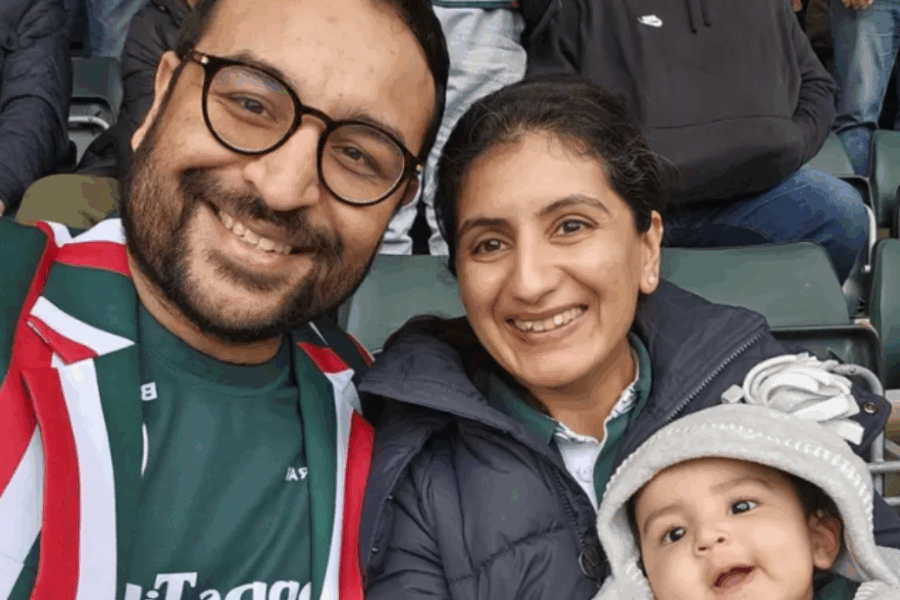
Priya and Abhishek Dattani from Leicester are enjoying life with their 11 month old son, Rohan. This is thanks to their participation in the Generation Study and the specialist care they received from staff in Clinical Genetics, Fetal Maternal Medicine, Paediatrics and Neonatology at UHL.
However, their story also highlights the vital role of early diagnosis and access to specialist care that the Generation Study is offering to families.
Priya explains: “Our first child, Aarav, was born in September 2022. As first-time parents, we didn’t know what to expect, but the pregnancy was normal and at first everything seemed fine. We had a few feeding issues, and he wasn’t putting on weight. We were told that it was nothing to worry about, and to keep an eye on things. But as time went on, as Aarav’s mum, I just knew something wasn’t right. Aarav wasn’t feeding and was starting to miss milestones in his development”.
When Aarav was 6 months old, Priya shared her concerns with family, friends and colleagues. A Health Visitor who knew a mutual friend agreed to visit them.
Priya continues: “She immediately picked up that something was wrong. Aarav wasn’t putting on weight and he was no longer moving his legs, which he had been previously. She said we should get Aarav seen straight away, so I we went to our GP and got a referral. I was seen by Dr Deepa Panjawni, a Neonatal Consultant at UHL. As soon as she saw Aarav, she arranged for blood samples from Aarav, myself and my husband to be sent for genetic testing. The samples confirmed that Aarav did have SMA”.
Although Priya and Abhishek finally had a diagnosis to explain Aarav’s symptoms, for them, it came too late. Sadly, Aarav died shortly after his first birthday.
Dr. Neeta Lakhani, Consultant in Clinical Genetics at the University Hospitals of Leicester NHS Trust, supported Priya and Abhishek through their grief. Priya continues: “The care we received from Neeta and Deepa was exceptional. Although we had lost the ‘critical window’ for treatment to help Aarav, Neeta showed us such kindness. She has helped us so much as a family, and very quickly showed who she is as a person, not just a doctor, but as a human being.”
Priya gave birth to her son Rohan in February 2025. She and Abhishek consented for Rohan to be screened through the Generation Study, which confirmed that he does not have SMA, or any of the other conditions tested for.
Priya is clear about the benefits of newborn screening through the Generation Study. She told us: “If Aarav had been diagnosed when he was born, we believe he would be with us now. In many ways, the fact that his brother Rohan is part of our family, and that genomic testing enabled him to be born without his brother’s condition, is a legacy to Aarav. It’s testament to the Generation Study and the exceptional support and care we have received at UHL. Rohan is absolutely the sunshine of our life, and looks so much like his brother.”
She added: “Being part of the Generation Study has also meant that my six cousins have been able to access genomic testing, to help them understand their risk and make family planning decisions. My sister gave birth at UHL, as did one of my friends. Both chose to be part of the Generation Study. We really do believe that knowledge is power, and that when it comes to rare conditions, not knowing, and not having early access to specialist care, is the worst thing any family can face”.
Dr Neeta Lakhani said: “Aarav was the reason I became involved in the Generation Study. It is a heartbreaking example of exactly why early screening is so crucial to the diagnosis and treatment of rare conditions in newborn babies. We know that we have very diverse communities here in the East Midlands. My hope is that Priya and Abhishek’s experience of losing Aarav and going on to have a healthy son in Rohan using the insights provided by genomic testing, will encourage families to consider taking part in the Generation Study”.