
Surgical teams have joined forces to treat more patients during a ‘super week’ initiative – a 23-hour model which increase surgical capacity and reduce waiting times for patients.
The initiative, which took place in Leicester’s Children Hospital, follows on from the success of last year’s super week and saw teams join up to focus resources on carrying out as many low complexity day cases operations as possible from a single ward, rather than across multiple wards, helping to maximise efficiency for operational and clinical teams.
Throughout the week 45 children received surgery, which included a broad range of specialties, including ear, nose and throat (ENT), ophthalmology, orthopaedics, respiratory, and plastic surgery. The 23-hour model meant patients could be admitted, treated, and discharged within a 23-hour window, helping to maximise the use of beds while maintaining high-quality care and patient experience.
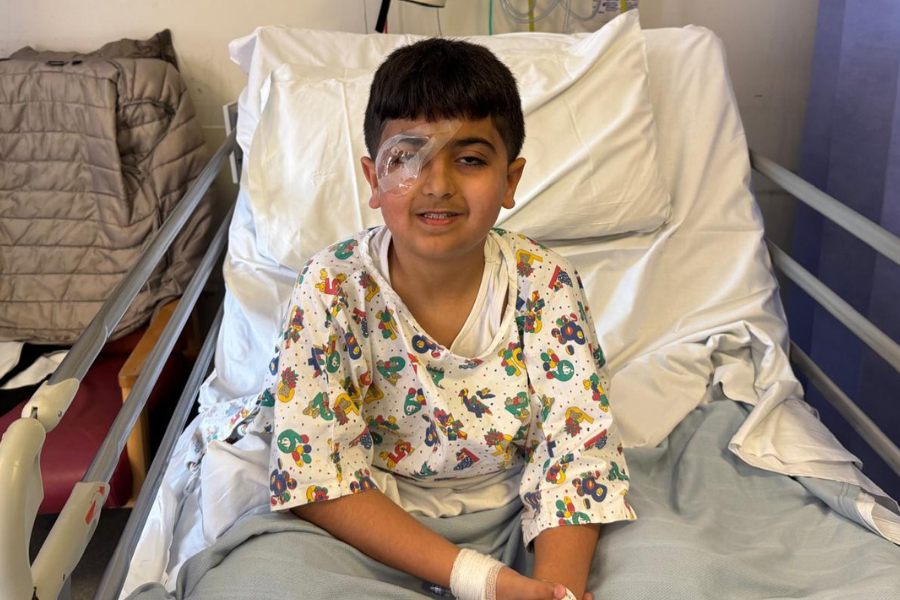
Among those treated during the week was nine-year-old Aman, who underwent a goniotomy, which is used to treat childhood glaucoma – a rare condition which affects eye pressure.
Aman’s dad, Omed, said: “We had been waiting for Aman’s treatment for some time, so being included in the super week made a real difference to us. He had a glaucoma in his other eye, four or five years ago and this new process has been very smooth, and the staff were incredibly reassuring throughout the day. Knowing he could have his operation and be back home so quickly really helped put us at ease.”
Clinical teams worked collaboratively across specialties to increase the number of procedures carried out during the week, with a focus on low to moderate complexity cases that can safely be managed within the short-stay pathway.
Marianne Elloy, ENT Consultant at UHL, said: “Following the success of our previous super week, where we saw the real impact this approach can have on reducing waiting times and improving patient flow, and we’ve been able to build on that learning for this super week.
“This is a step-change in how we deliver elective care. By bringing teams together we can treat significantly more patients safely and efficiently, while maintaining a high-quality patient experience.
“What’s particularly encouraging is how adaptable this model is. Its success means we’re now planning three further super weeks over the summer, allowing us to continue increasing capacity and ensure more patients are treated sooner.”