
The NHS Abdominal Aortic Aneurysm (AAA) screening programme has been introduced across England and the Implementation began in March 2009. University Hospitals of Leicester (UHL) was one of the first six pioneer Institutions in the country to implement screening for abdominal aortic aneurysm. Prior to becoming a part of the national programme between 1996 and 2009 the UHL offered a voluntary ‘opt’ in screening programme for the GP practices which achieved approximately 40% coverage of the Leicester, Leicestershire and Rutland area.
With the implementation of the National Screening Programme in 2009, this has now been extended to cover all GP surgeries across Leicester, Leicestershire and Rutland. The screening test is very quick, painless and reliable.
What is an Abdominal Aortic Aneurysm?
An abdominal aortic aneurysm is a balloon-like swelling in the aorta — the main artery that carries blood from your heart through your abdomen. If not detected early, it can become serious, as the aneurysm may grow over time and eventually burst (rupture).
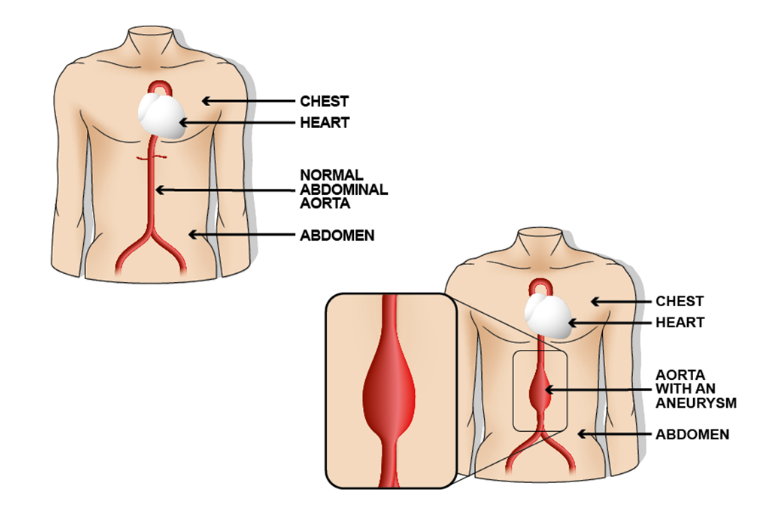
Understanding AAA
- Around 1 in 70 men aged 65 in England has an AAA.
- Around 3,000 deaths each year in men aged 65 and over in England and Wales from ruptured AAA .
- Deaths from ruptured AAA account for 1.7% of all deaths in men aged 65 and over.
Symptoms of AAA
Abdominal aortic aneurysms often grow slowly without symptoms, making them difficult to detect. This is why the AAA screening programme was introduced, following research, which showed it could reduce the rate of premature death from ruptured AAA by 50% by detecting and treating large aneurysms before they burst. Around 1 in 92 men who are screened have an AAA.
Diagnosis
- A simple ultrasound scan is performed to detect an AAA.
- 985 in 1000 men who are screened have normal results
- 14 in 1000 men are found with smaller to medium aneurysm
- 1 in 1000 men had large aneurysm( Aortic diameter 5.5cm or above)
When an aneurysm is detected early, treatment is safe and effective and the aneurysm is curable.
Who is at risk?
People at a higher risk of getting an AAA include:
- Men are six times more likely to develop an aneurysm than a woman. The chance of having an aneurysm increases with age. Two out of every three deaths from ruptured AAA in England and Wales occur in men who are over 65.
- People who smoke: if you smoke or used to smoke, you’re up to 15 times more likely to get an AAA
- People with high blood pressure: high blood pressure can double your risk of getting an AAA
- People with a parent, sibling or child with an AAA – you’re about four times more likely to get an AAA if a close relative has had one.
Results of AAA screening
Immediately after the scan, men will be informed of the result of the test by the screening practitioner.
- Negative result: Men will not be asked to return to have another scan and will be discharged from the screening programme.
- Positive result: If an AAA is detected, the patient pathway and the implications of the diagnosis are fully explained to men in a clear, concise and sensitive way. General Practitioners will be informed of the outcome of all positive AAA scans.