A test which helps patients with acute myeloid leukaemia (AML) to receive personalised treatment is one of the latest innovations to be rolled out by the cytogenetics laboratory at the Leicester Royal Infirmary (LRI).
The team has introduced a test to find a specific genetic alteration which, if present, means that the patient could respond well to a recently approved targeted therapy for AML, in a situation where time is of the essence.
Leukaemia is cancer of the white blood cells, which progresses quickly and aggressively, and usually requires immediate treatment. Patients with AML who have the IDH1 genetic variation are eligible for the targeted therapy – but they must begin their treatment as soon as possible.
The new test means that bone marrow samples from patients with AML can be tested in Leicester, without needing to be sent to UHL’s partner genomics laboratory at Addenbrooke’s Hospital in Cambridge for analysis. Processing the tests locally means results can be returned to patients more quickly. The team aim to return results within the target timeframe of seven days, ensuring that patients with the IDH1 genetic variation can start their personalised therapy.
Since introducing the new test in May 2025, the laboratory has tested 46 patients for variations in the IDH1 gene, and have identified four who were suitable for personalised therapy.
Deputy Head of UHL’s Cytogenetics Service, Paul Warman, said: “Generally, patients need to start treatment within a week of receiving a diagnosis of AML, and so if this specific genetic variation is not identified in time, the patient would be started on a non-specific treatment, which may not be as effective. But if we can find the variant in the IDH1 gene, they can access personalised therapy.
“This is just one of many different genetic tests that we process in our laboratory which help patients to receive the most effective care.”
On behalf of the leukaemia team, Dr Anna Tsoulkani, Consultant Haematologist, said: “The launch of molecular testing locally has improved turnaround times, which means we can start eligible patients on personalised and targeted AML treatment quicker, improving remission rates and survival for these patients.
“The whole leukaemia team are very grateful for this service, which has helped to improve the care we deliver to our patients.”
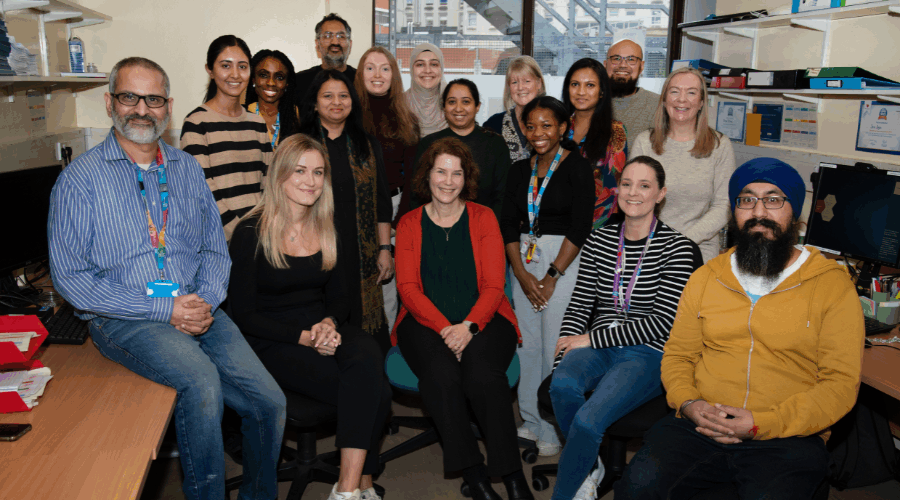
The cytogenetics laboratory is a consultant clinical scientist-led service, located in the Leicestershire Genetics Centre at the LRI. The team deliver many different tests for patients who have rare and inherited disorders, and cancers, searching for genetic changes that can help to identify or guide treatment of illnesses, as well as monitoring response to treatment.
As part of the NHS East Genomics network of three laboratories, UHL delivers cutting-edge genetic testing across the East of England and East Midlands, to a population of more than 10 million people. NHS genetic testing is available for more than 600 clinical indications across rare diseases and cancer. UHL’s lab handles around 5,500 specimens per year on behalf of East Genomics, across all of its rare disease and cancer genomic testing.
Lara Cresswell, Consultant Clinical Scientist and the head of UHL’s cytogenetics service, added: “The successful rollout of this test is a great example of how our service is constantly developing.
“Genetic testing within the NHS is evolving rapidly. There are always new trials and treatments being approved for genetic variants, so our small team has to constantly adapt to changes to testing and patient eligibility.
“I’m really proud of the whole team for working hard to deliver timely results that are improving the lives of patients.”