
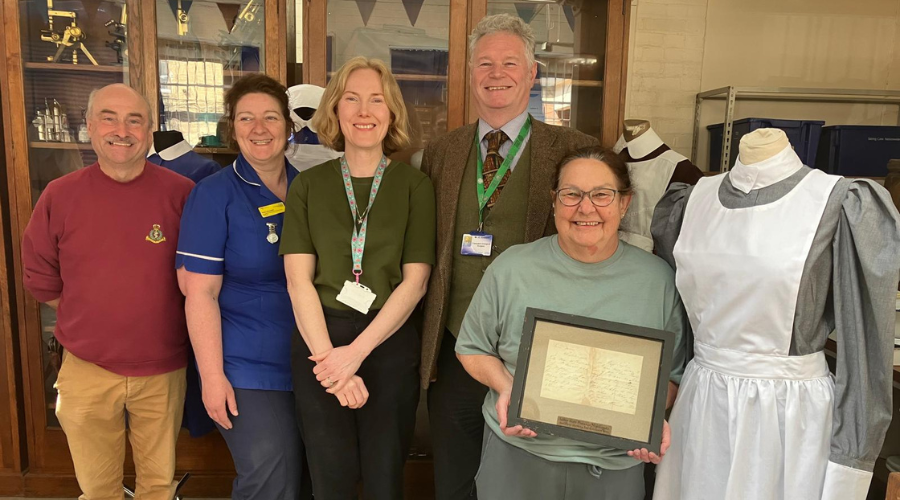
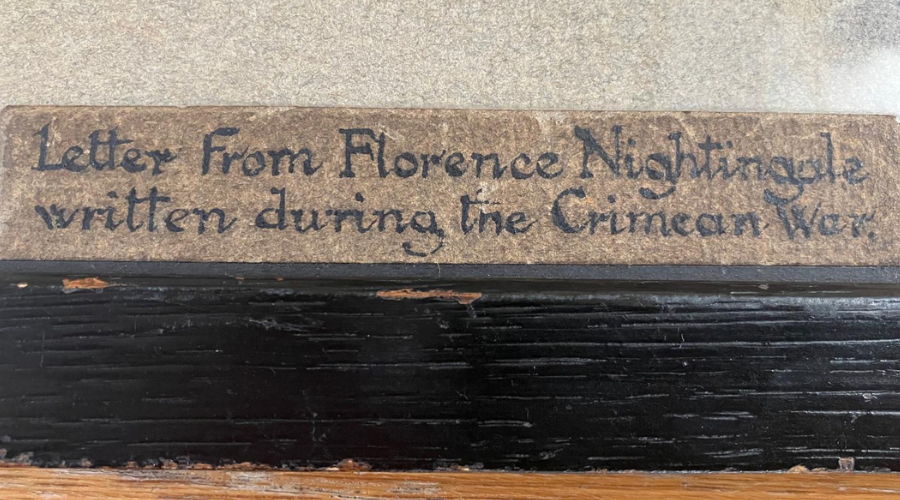
A letter sent by Florence Nightingale forms the centrepiece of an exhibition on the history of nursing in Leicester, which opened on International Nurses’ Day.
The letter is displayed at UHL’s Creative Health and Heritage Centre, at the Glenfield Hospital, alongside other archive materials held within the Trust’s rich collection of materials, including historic uniforms, photographs and medical instruments. The exhibition will be available to see on Fridays throughout the summer, from 11am to 4pm.
The legendary ‘Lady with the Lamp’ revolutionised the field of nursing through her work caring for injured soldiers during the Crimean War in the 1850s, and her birthday, 12 May, is marked globally by the profession each year.
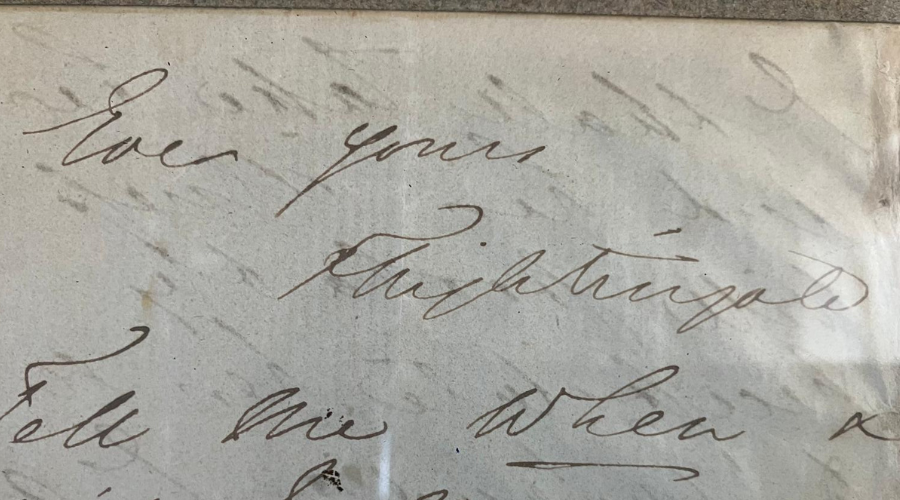
Florence’s letter was sent from the British military hospital at Scutari, near Constantinople (now Istanbul) in April 1855. It is addressed to a fellow nurse, Miss Frances Taylor, and concerns the welfare of nurses who had fallen ill while caring for wounded soldiers and been sent home.
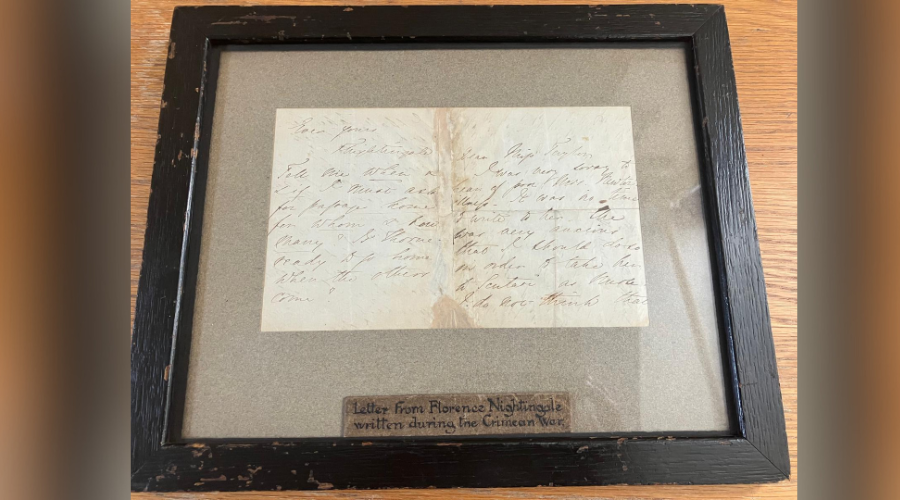
Conditions at the Scutari hospital were so poor that soldiers were far more likely to die from infectious diseases than from wounds suffered on the battlefield – and these illnesses inevitably also struck down many of the nurses who cared for them. In the letter, Florence expresses her concern for those in Miss Taylor’s care who are unwell, and asks for news of nurses whom she hopes may have recovered sufficiently to resume their duties.
UHL urology consultant and medical historian, Jonathan Goddard has transcribed the letter and identified each of the nurses mentioned within it, using resources published by the Florence Nightingale Museum.
Jonathan said: “In Florence’s time, people had a much less positive view of nurses than they do today, and they would much rather be looked after by members of their own family than by a paid nurse. Florence’s family certainly disapproved of her becoming a nurse, but the impact she went on to have in professionalising nursing was profound.
“This letter shows how sickness took a heavy toll on the nurses who answered the call to help injured soldiers, working in appalling conditions and in many cases being sent home, or dying of the diseases which ravaged the hospital at Scutari.
“As a medical historian, this is the type of ‘detective work’ that I love to do. The more we go through the papers and materials in UHL’s archives, the more fascinating insights we will discover, to help bring the history of healthcare in Leicestershire to life.”
The framed letter was found in the archives by Creative Health and Heritage Senior Project Manager, Sallie Varnam, and Chris Jeavons, a postgraduate researcher from the Department of Museum Studies at the University of Leicester.
Sallie said: “It was when we started to search through the archives in earnest that we realised that how many treasures there were to discover, like this letter from Florence Nightingale – it was like an archaeological dig.
“Chris’ support made this work possible, and we now have a team of volunteers, including current colleagues like Jonathan and former members of staff, whose passion for history will help us to find and display more gems in the future.”
A week of events is being held at the Creative Health and Heritage Centre to mark national Creativity and Wellbeing Week, from 18 to 22 May. More information about the events can be found on Ticket Tailor.