A Leicestershire mum who is preparing to undergo a stem cell transplant at University Hospitals of Leicester NHS Trust (UHL) is encouraging more people to sign up as donors this Stem Cell Awareness Week.
Nikola, from Melton Mowbray, is due to receive a stem cell transplant later this year after being diagnosed with acute myeloid leukaemia (AML) in May.
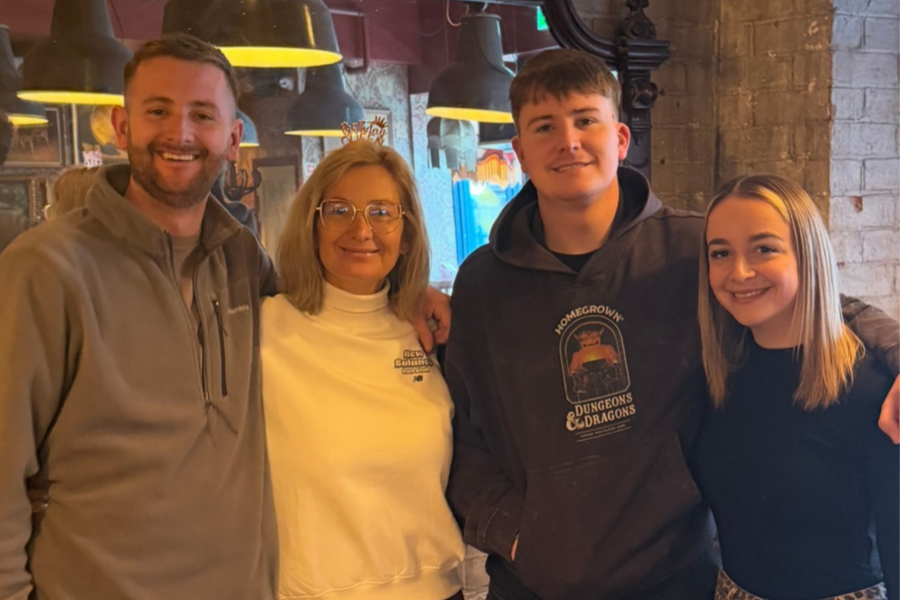
Her diagnosis came 28 years to the day after her eldest son, Joe, was diagnosed with acute lymphoblastic leukaemia as a two-year-old. After three years of chemotherapy, Joe was given the all-clear and is now a stepdad of two and expecting his first child next month, making Nikola a grandmother for the first time.
Nikola had been fit and healthy, even completing a half marathon just two weeks before her diagnosis. Recognising the symptoms from her family’s previous experience of leukaemia, she sought medical advice and was later diagnosed with AML.
Following three rounds of chemotherapy, Nikola was told she would need a stem cell transplant and an unrelated donor match would need to be found.
She said: “It was a shock but I also knew. This has brought back what Joe and we went through although he didn’t need a stem cell transplant.
“My whole family are registered for stem cell donation but doctors said I needed an unrelated donor. It was nerve-wracking waiting to see if there was a matching donor, your life is in the balance. I had a match within a few weeks, I was so happy. I can’t thank people enough for registering, it is such a selfless act. Donors are amazing.
“I am nervous and also excited about my transplant, I’ll do whatever it takes to be a Nana. I can plan for the future now, the first thing I will do is a park run and have so much family time. I’m going to hug my granddaughter and never let her go, I can’t wait to be Nana Nik.”
Stem Cell Awareness Week, which takes place from 12-18 October, aims to raise awareness of stem cell donation and encourage more people to join the NHS Stem Cell Donor Registry.
A stem cell transplant can be a life-saving treatment for patients with blood cancers such as leukaemia and other serious blood disorders. The larger and more diverse the donor registry, the greater the chance of finding a suitable match for patients in need.
Urging more people to register, Nikola said: “People need to look after each other, be willing to help, you never know when you might need help. Saving someone’s life is the most selfless thing you can do. It’s not a difficult process to save a life.
“Stem cell donors are giving someone a chance at life, someone is giving me my life back and the chance to be a Nana.”
Last year, more than 29,000 blood, platelet and plasma donors joined the NHS Stem Cell Donor Registry, the highest number recorded in the past 30 years. NHS Blood and Transplant is continuing to encourage eligible donors aged 17 to 40 to sign up, particularly those from minority ethnic backgrounds, helping more patients find potentially life-saving matches.
Dr Amy Webster, Consultant Haematologist and Head of Haematology at UHL said: “Stem cell transplants can be life-saving for patients with blood cancers such as leukaemia and other serious blood disorders. For many patients, finding a suitable donor offers the best chance of a cure.
“Stories like Nikola’s highlight just how important stem cell donation is. Every person who joins the donor registry increases the chances of a patient finding a match when they need one most.
“While we have made great progress in increasing the number of registered donors, we still need more people to come forward, particularly those from diverse ethnic backgrounds, to ensure every patient has the best possible chance of receiving potentially life-saving treatment.”
People aged between 17 and 40 who donate blood, platelets or plasma can join the NHS Stem Cell Donor Registry at their donation appointment.
To find out more about stem cell donation, visit www.blood.co.uk/stemcells.