
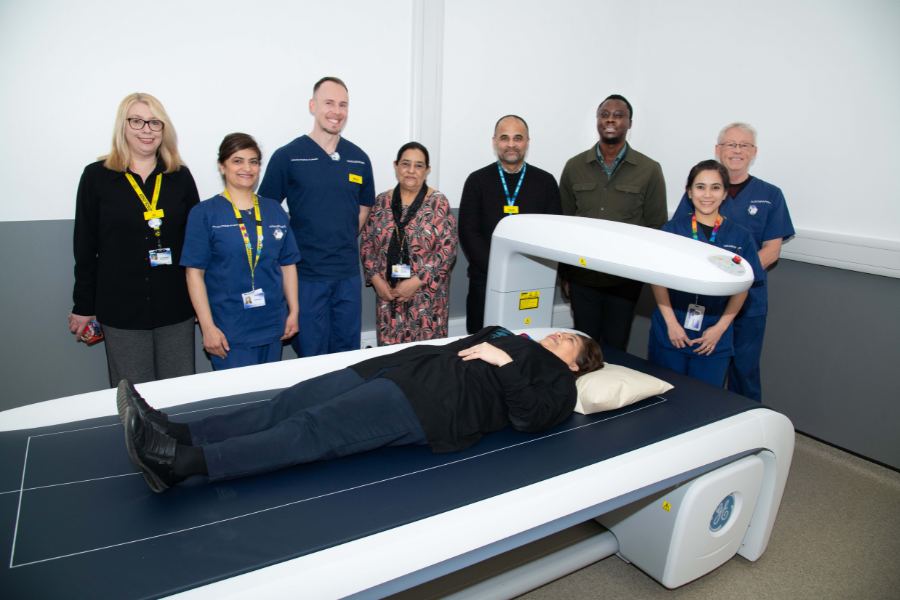
Patients across Leicester, Leicestershire and Rutland are set to benefit from a new bone scanner to diagnose fragile bones earlier and prevent painful, life-changing fractures.
The new state‑of‑the‑art DEXA scanner, which has been installed at the Leicester General Hospital, is funded through a £2.6 million government investment to support the detection and treatment of osteoporosis and other bone conditions as part of the wider 10-Year Health Plan.
A DEXA scan (Dual-Energy X-ray Absorptiometry) is a fast, painless, low-dose X-ray test that measures bone density to help diagnose osteoporosis and assess fracture risk. The new scanner will increase UHL’s scanning capacity, support earlier diagnosis of osteoporosis and metabolic bone disease, reduce waiting times, and improve patient outcomes.
Deputy Operational Lead for Imaging, Gemma Coles, said: “The additional DEXA scanner is an important step forward in supporting improved care for patients with bone conditions. This will significantly expand the number of appointments we can offer each week, reduce waiting times, and support earlier diagnosis of osteoporosis and other metabolic bone disorders.
“Earlier access to DEXA scanning means patients can begin the right treatment sooner, helping to prevent fractures and reduce hospital admissions. This includes earlier initiation of bone‑strengthening treatments such as bisphosphonates, improved fracture‑prevention strategies, and enhanced support for UHL’s fracture liaison services. By diagnosing low bone density before fractures occur, clinicians can help reduce avoidable admissions and prevent long‑term complications.”
The introduction of the new scanner means UHL will have two DEXA scans and can deliver up to 100 additional bone scans each week. This will help the Trust reduce waiting times, offer more flexible clinics, and support specialties that depend on timely bone‑density results.
Helen Hendley, Chief Operating Officer at UHL, said: “The expansion of our DEXA capacity is a major step forward in UHL’s wider plans to modernise diagnostic imaging and improve patient experience. With more appointments available, shorter waits, and faster access to treatment, patients will now benefit from more responsive and proactive bone‑health care.”