
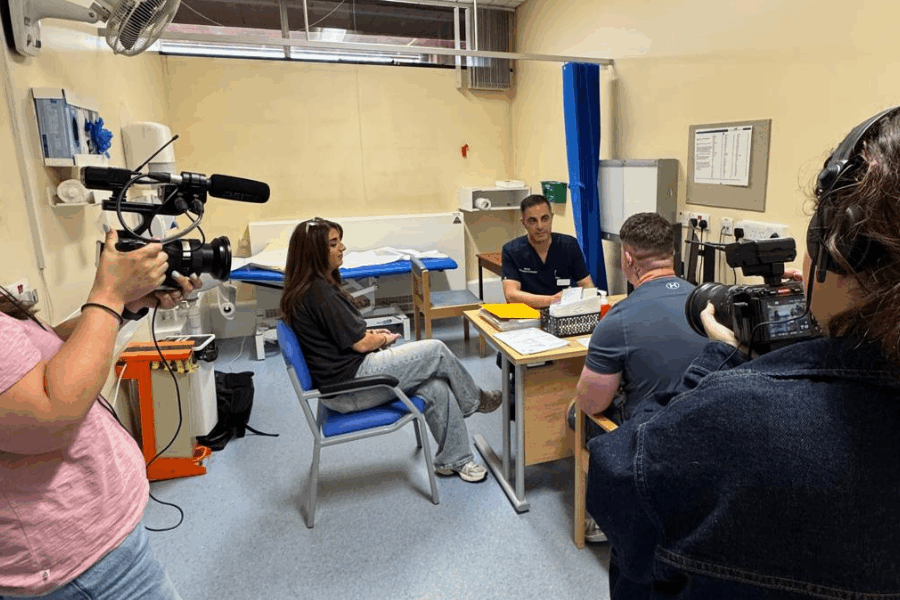
The life-changing work of urology surgeons at University Hospitals of Leicester NHS Trust (UHL) has been featured in a documentary by ITV Wales and Welsh-language broadcaster S4C.
The documentary follows the journey of 24‑year‑old UHL patient Ollie from South Wales, who first experimented with ketamine as a teenager. Over the years, the drug caused extensive damage, leading to constant bladder pain and bleeding. By his early twenties, Ollie’s bladder had shrunk and could no longer stretch or hold urine, ultimately requiring surgery to remove it.
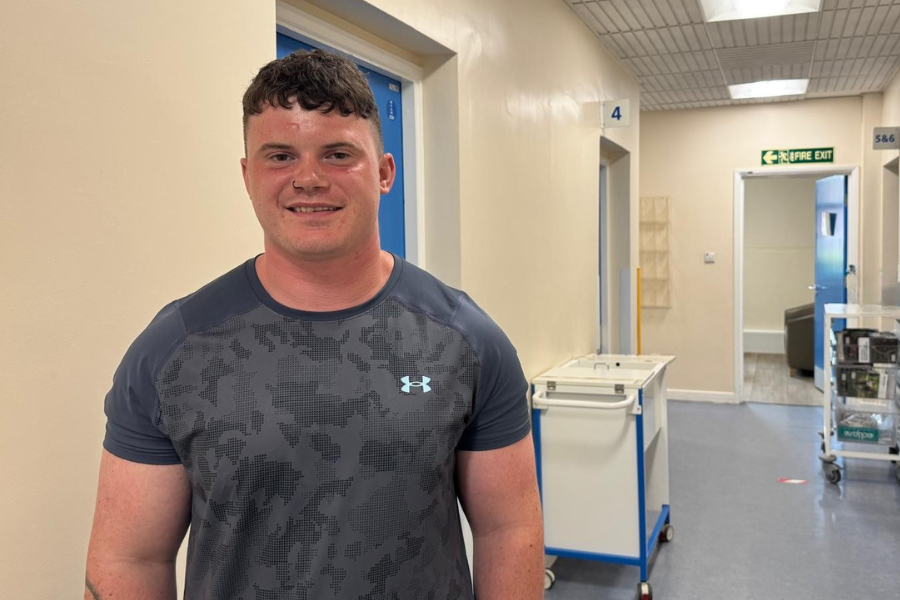
The surgical team who performed Ollie’s surgery were the first in the East Midlands to carry out a robotic‑assisted bladder removal on a patient with severe ketamine‑related bladder damage, using advanced, state‑of‑the‑art technology to carry out the procedure.
Speaking ahead of his surgery, Ollie said: “The pain has been unbearable for years. I’m beyond relieved that the surgery is finally here. It’s been a four-year struggle to get to this point, and I know this operation will change my life. I can finally look forward to moving back to Wales and starting fresh.
“The first time I noticed blood in my pee, I ignored it, and I wish I hadn’t. I never imagined it would come to this, and I became reliant on ketamine just to cope with the pain it caused. This surgery gives me a real chance at a normal life again.”
Ketamine-induced bladder is a side effect of prolonged recreational ketamine use, which causes inflammation and the thickening of the bladder wall. Over time, this damage can cause the bladder to shrink and lose its ability to stretch and hold urine, leading to severe pain and incontinence.
Cases of the condition have increased considerably in recent years as ketamine has become more accessible. Last year, the government announced a review to reclassify the drug to a Class A substance following recreational use of the drug reached record levels.
Consultant Urological Surgeon Jaskarn Rai, who featured in the ITV documentary, said working with the broadcaster has been vital in amplifying how dangerous the drug can be.
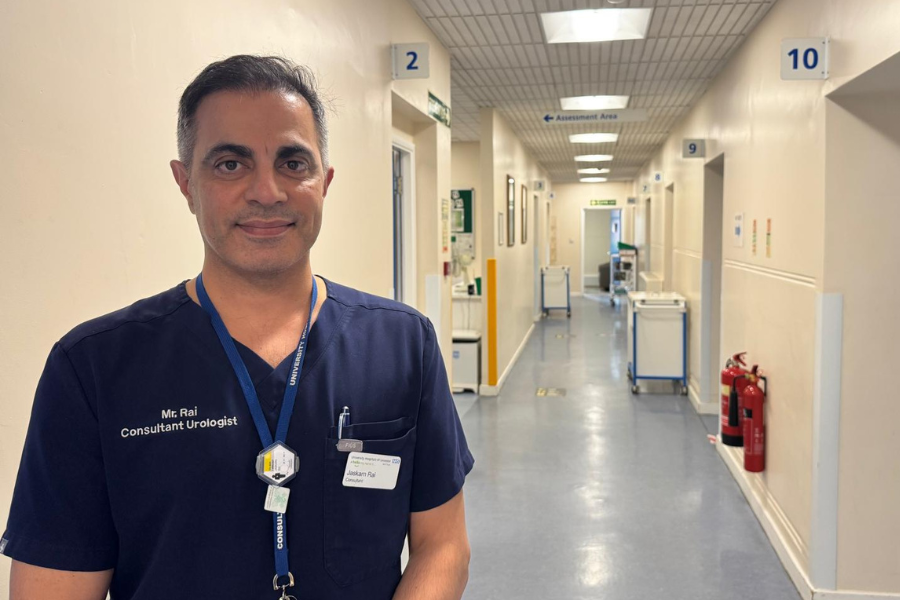
He said: “Just a few years ago, ketamine bladder was incredibly rare, however over the last few months, we have started to see one or two patients a month who are often presenting at advance stages of the condition. Based on ketamine use patterns, we expect these numbers to continue to rise.
“By working with documentary team to share Ollie’s story, we are able to show the real, life-changing impact that ketamine use can have and help people understand why it’s important for them to seek help early and avoid sustained use of the drug.”
The four-hour surgery, which removed Ollie’s bladder and diverted his urine to a stoma, was successfully performed at the Leicester General Hospital using state-of-the-art robotic technology, which allows for enhanced precision, smaller incisions, and reduced recovery times compared to traditional open surgery.
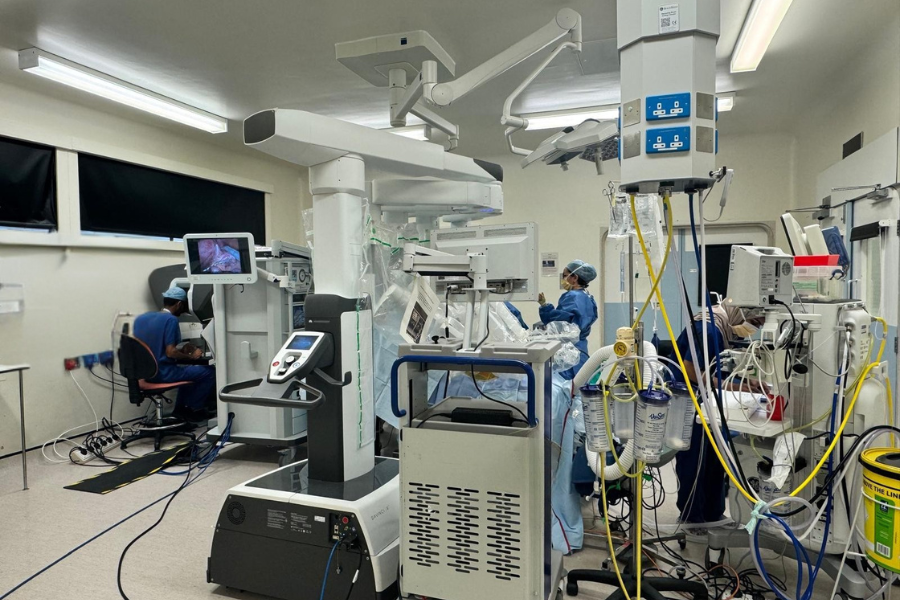
Malek Gaashan, Consultant Urological Surgeon at UHL, who led the operation, said: “Robotic surgery is most commonly used for bladder cancer patients, but this was the first time we have used the robot to treat ketamine-induced bladder here at UHL.
“The technology allows us to work with a high degree of precision inside the pelvis, which makes a big difference for patients, like less blood loss, fewer complications, and a quicker recovery. It was the right choice for Ollie and shows how we can adapt robotic techniques to meet new clinical challenges.”
Ollie is now recovering well, and the team at UHL hopes this successful case will pave the way for more robotic procedures to support patients living with complex urological conditions.
You can watch the documentary on YouTube.